

GIT 542 — UX Case Study
Nyland
Cohousing
Website Redesign
A full-cycle UX project for a real client — from heuristic evaluation and usability testing to high-fidelity redesign.
Course
GIT 542 — Usability & UX
Timeline
Spring 2026 Semester
Team
Nyland B Team · 6 members
Methods
Heuristic · Survey · Usability Test
— Project Overview
What is this about?
Nyland Cohousing is an intentional community in Lafayette, Colorado. Their website — nylandcohousing.org — serves both current residents and prospective members. Our team was tasked with a comprehensive usability evaluation of the site.
The central problem: first-time visitors couldn't quickly understand what cohousing is, couldn't find housing pricing, and couldn't see evidence of an active community — all critical decision-making factors.
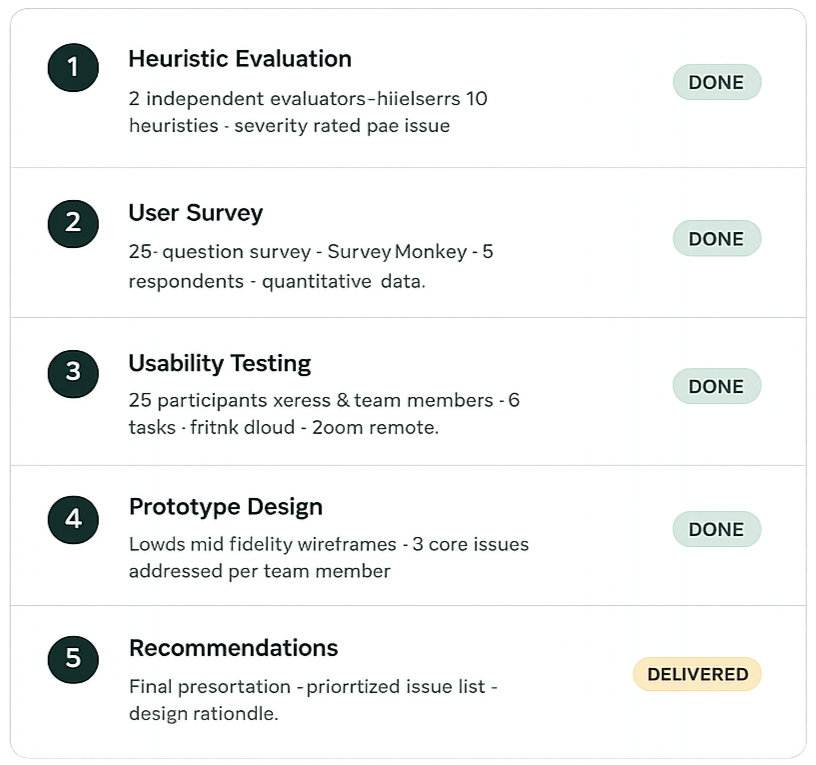
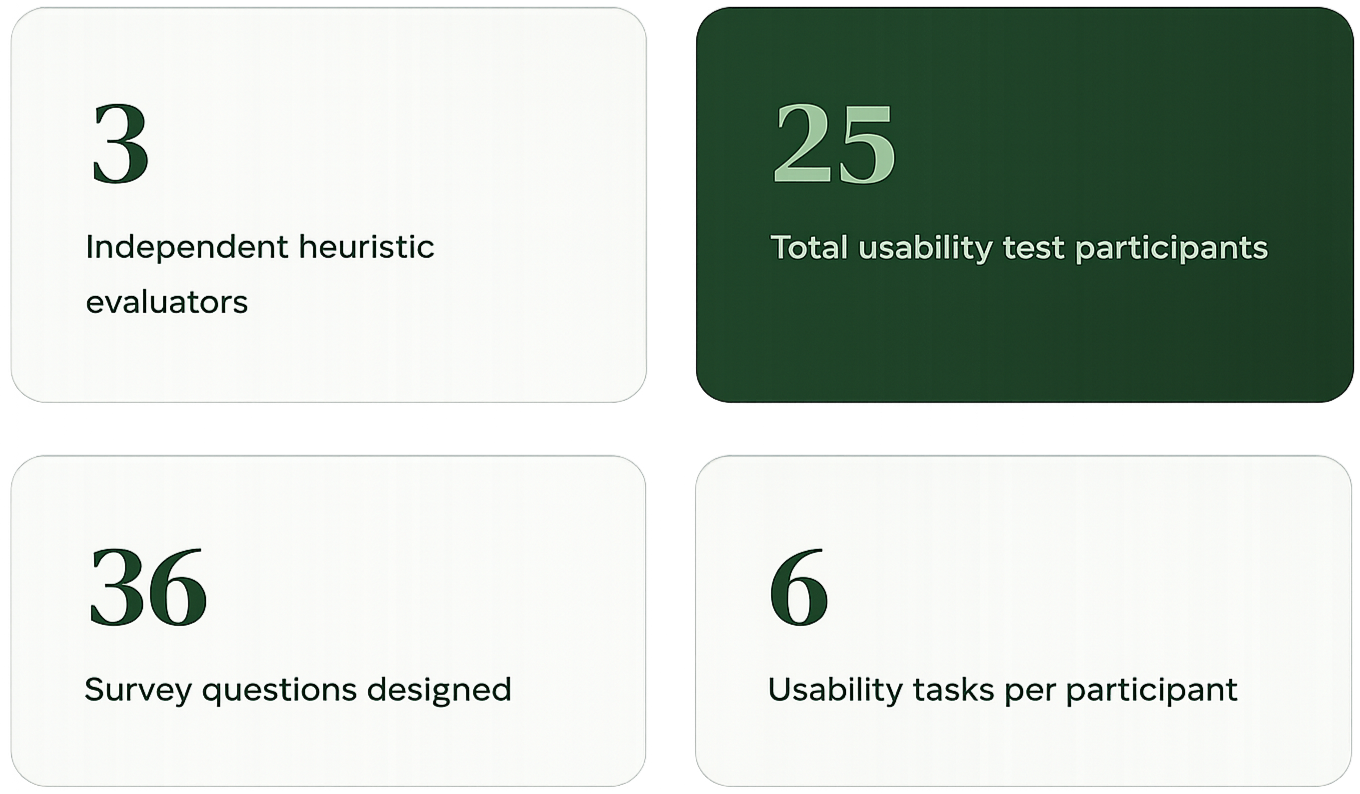
Over a full semester, the team conducted independent heuristic evaluations, a user survey, remote usability tests with 25 real participants, and produced wireframe prototypes addressing the top findings.
My role: Full participation across all phases — heuristic evaluation, survey design, usability test moderation, data analysis, prototype design, and final presentation.

— Phase 1 — Heuristic Evaluation
Expert review of the existing site
Each team member independently evaluated the site against Nielsen's 10 usability heuristics, using Jeff Rubin's severity scale (1–4).
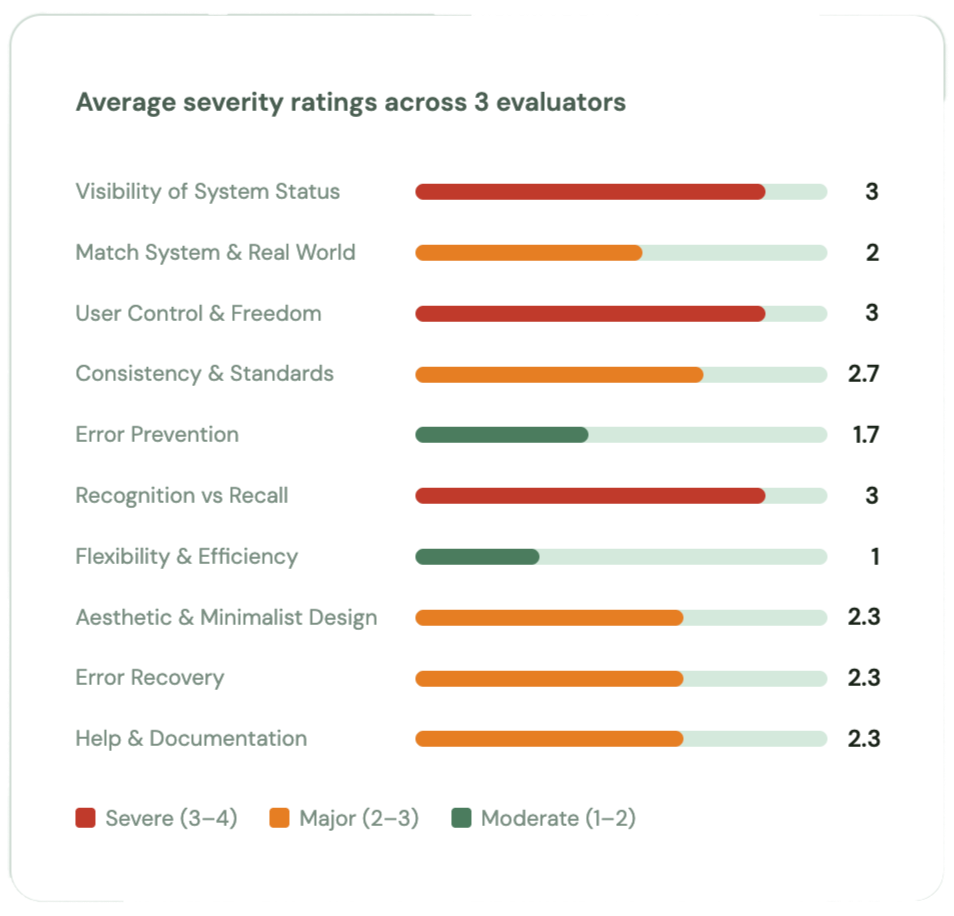

Evaluated by:
Top findings

No active page indicator
No highlighted nav states or breadcrumbs — users couldn't tell which page they were on. All 3 evaluators flagged as severity 3–4.Cohousing concept buried
The site assumes visitors already know what cohousing is. Explanation appeared below values and vision content, requiring scrolling to find.
Navigation inconsistency
Logo click-to-home broke on password-protected pages. Only 3 nav buttons, missing key sections like gallery, events, and news.Dense, unbalanced content
Multiple pages had walls of text with no accompanying visuals, making scanning difficult. "Co-housing" also spelled inconsistently throughout.
Calm visual style appreciated
Nature-inspired aesthetic and color palette were appropriate. Text was readable across all evaluators.— Phase 2 — User Survey
Quantitative user research
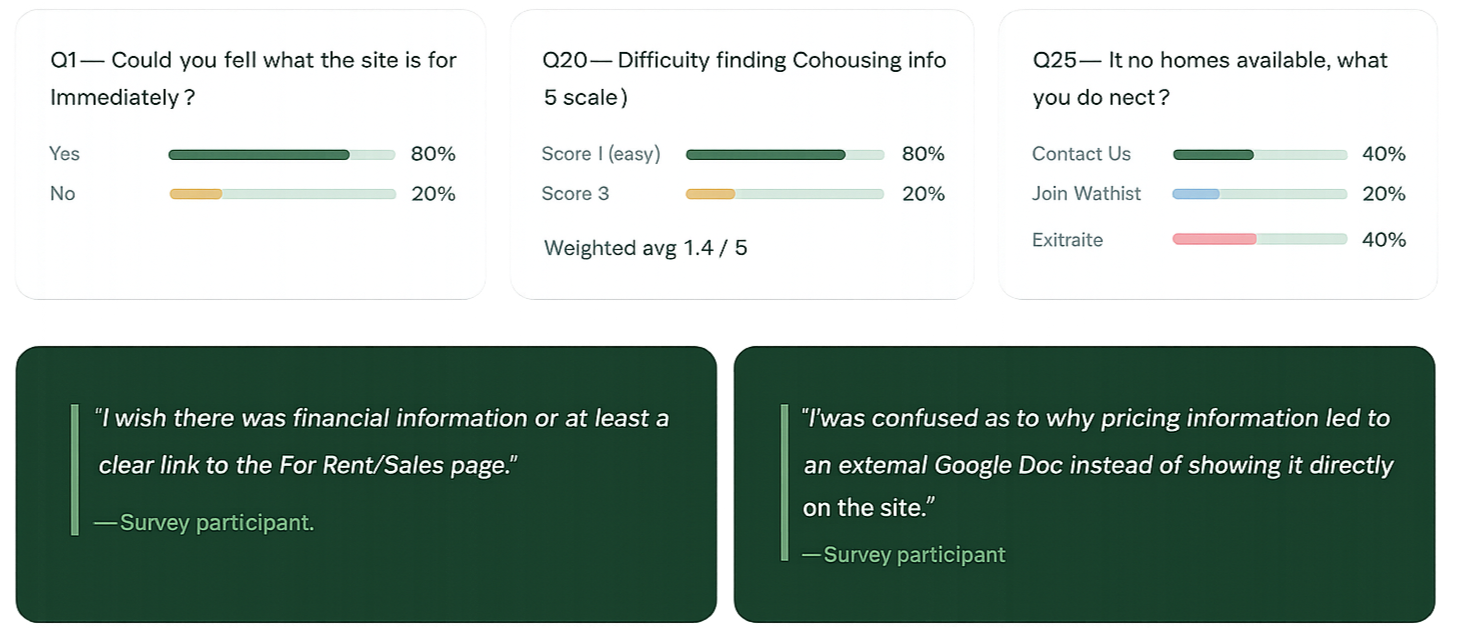
A 36-question survey deployed via SurveyMonkey, with 5 participants recruited through the ASU GIT class.
— Phase 3 — Usability Testing
Testing with real users
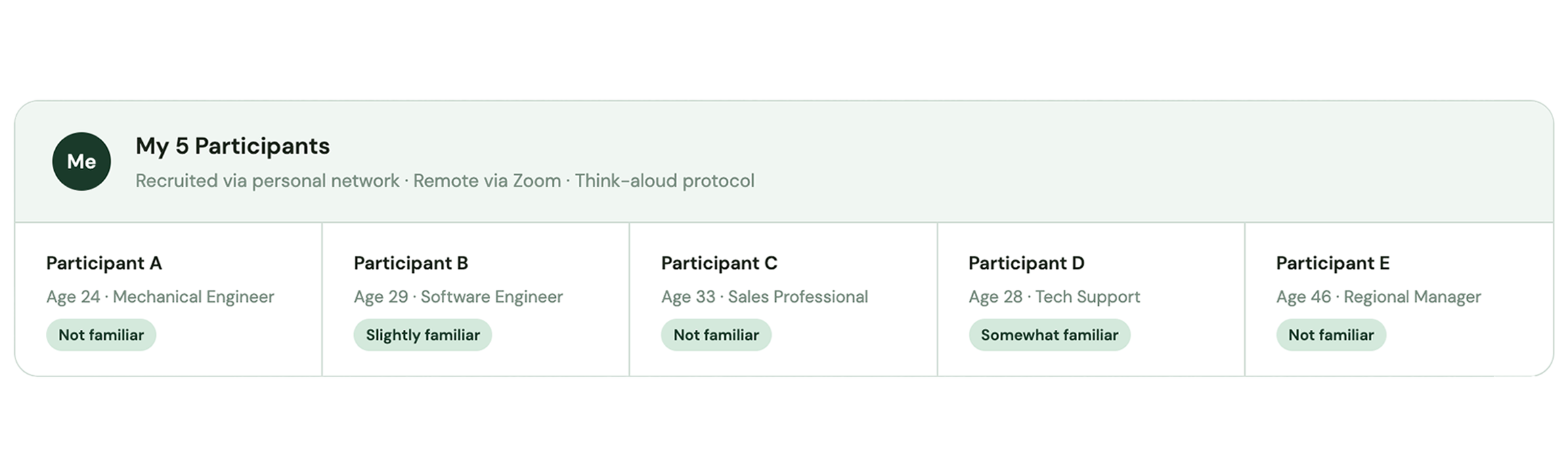
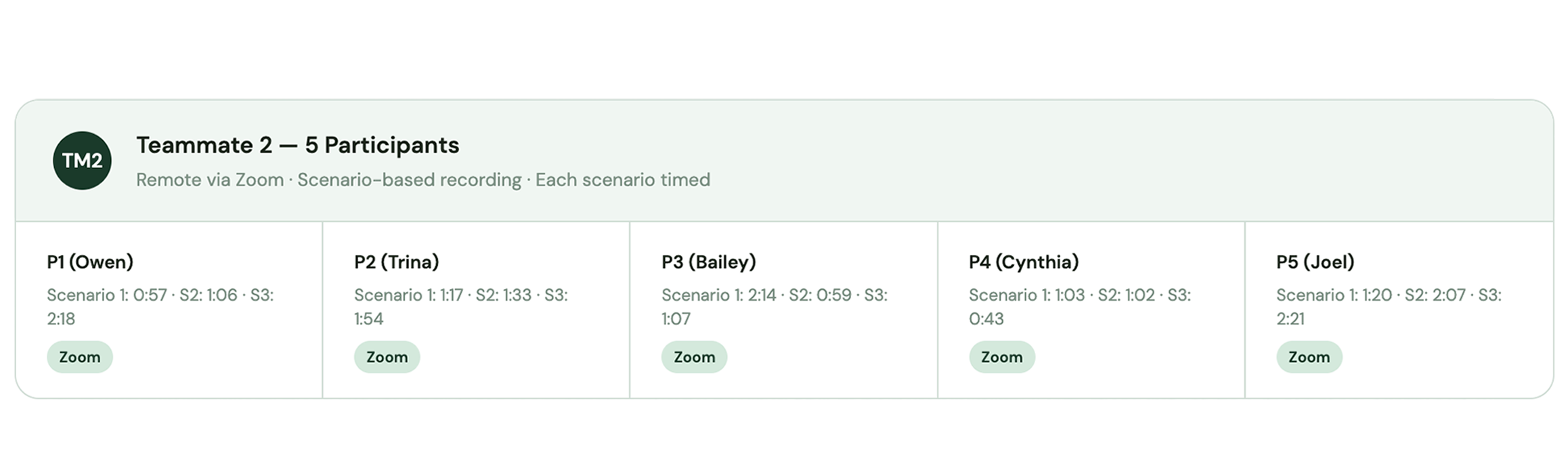
Each team member recruited 5 participants and conducted remote usability tests via Zoom using a shared test plan, script, and observation sheet. All 25 participants completed 6 tasks with think-aloud protocol. Names below are pseudonyms to protect participant privacy.
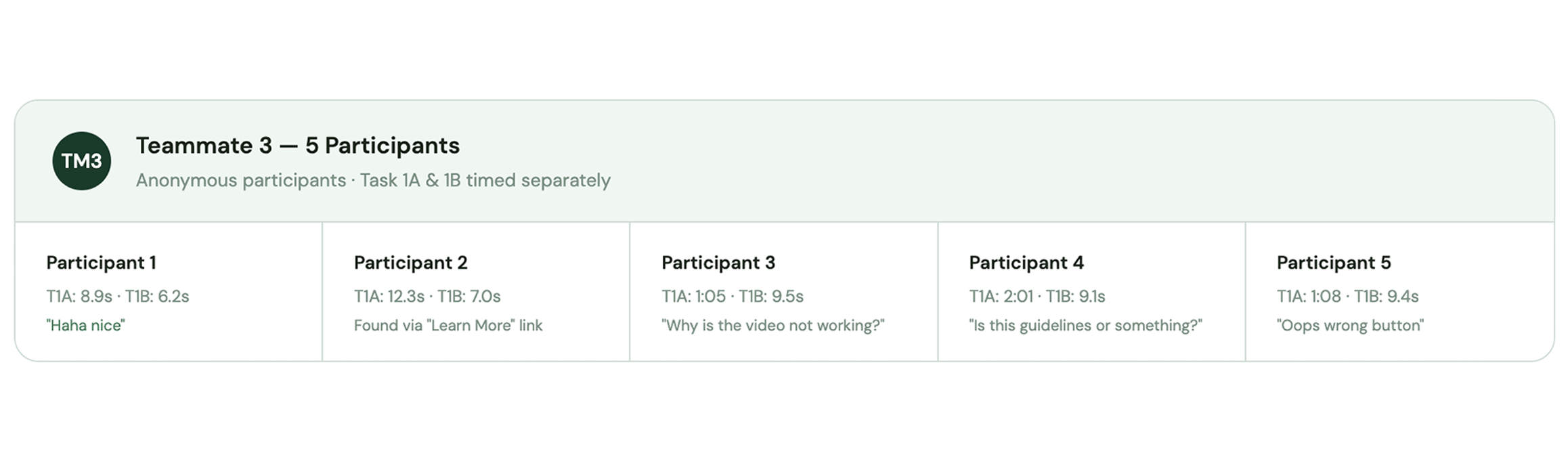
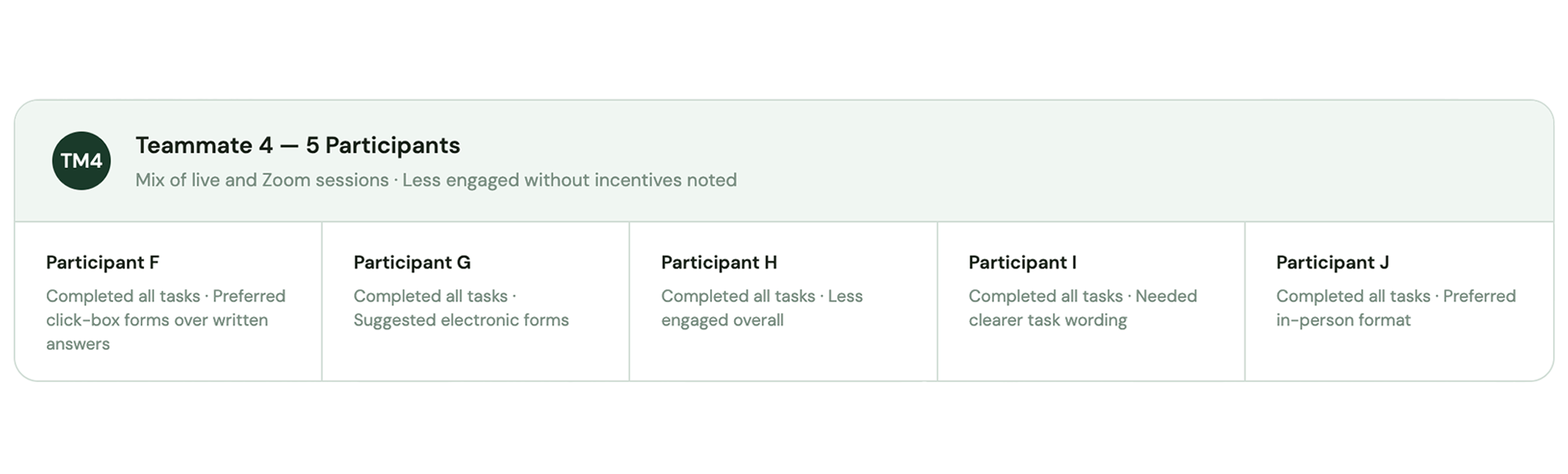
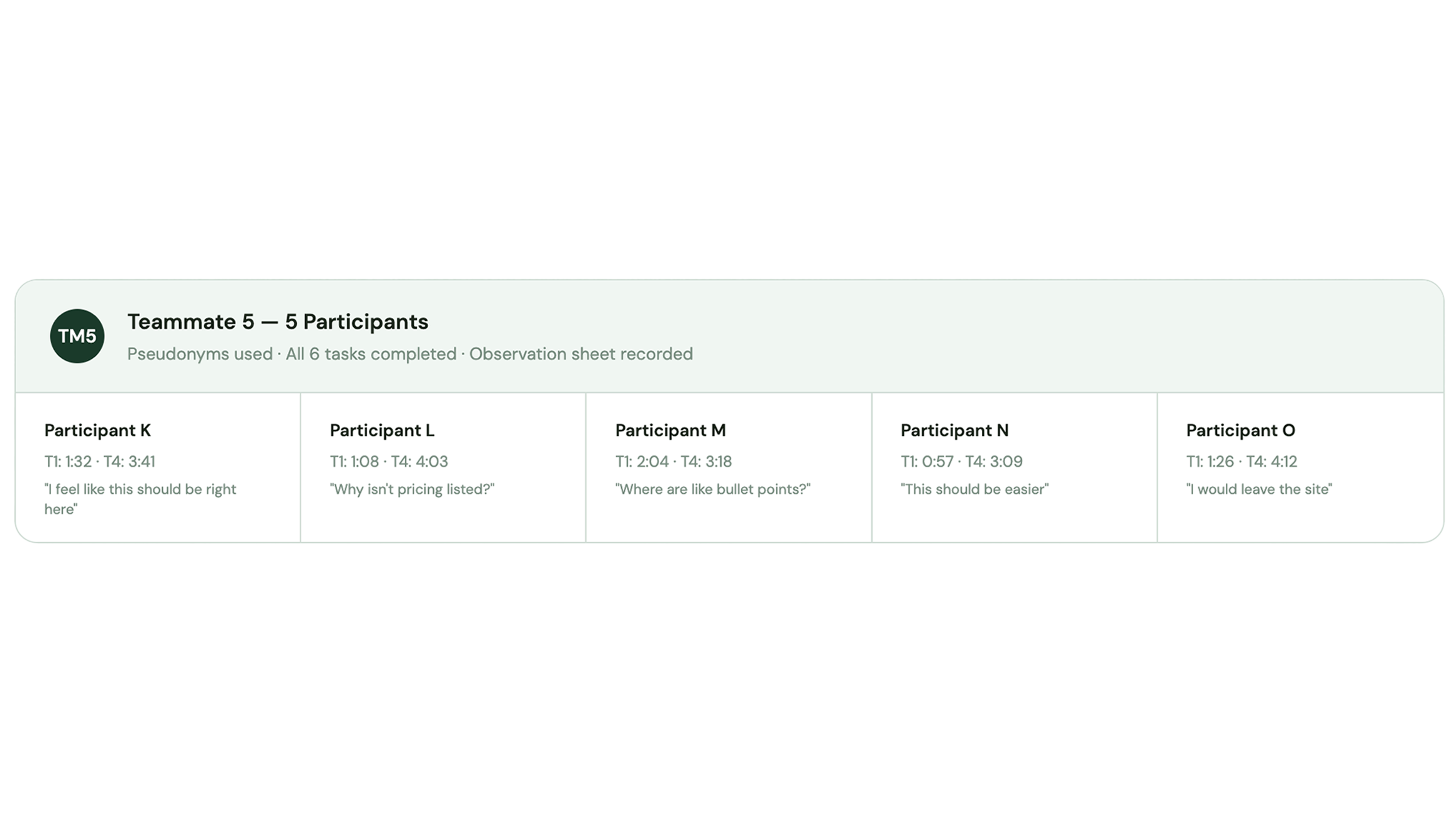
Consolidated task difficulty across all 25 participants
Task
T1 — Find what cohousing is
T2 — Find a community value
T3 — Find homes information
T4 — Find pricing / financial info
T5 — Find community events
T6 — Find updates / news
AVG Time (MY 5)
T1 — ~0:46
T2 — ~0:36
T3 — ~0:44
T4 — ~1:14
T5 — ~0:28
T6 — 0 / 5 success
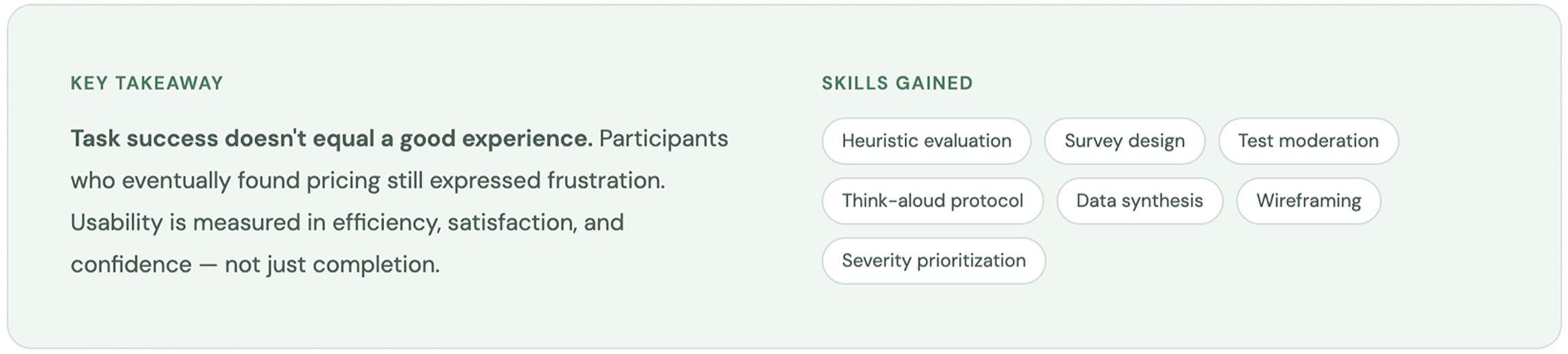
CROSS-TEAM PATTERN
T1 — Text-heavy; took longer for unfamiliar users (up to 2:04)
T2 — Consistently fast; values section was well-structured
T3 — Generally easy; users engaged positively with homes section
T4 — Biggest friction — up to 4:12; multiple users said they'd exit
T5 — Mixed — some found partial info; no clear events page exists
T6 — All teams: users checked footer; section doesn't exist
4:12 to find pricing
The longest observed attempt on Nyland’s existing site. Pricing was buried in navigation, and multiple participants said they would leave before finding it.
What changed in the redesign
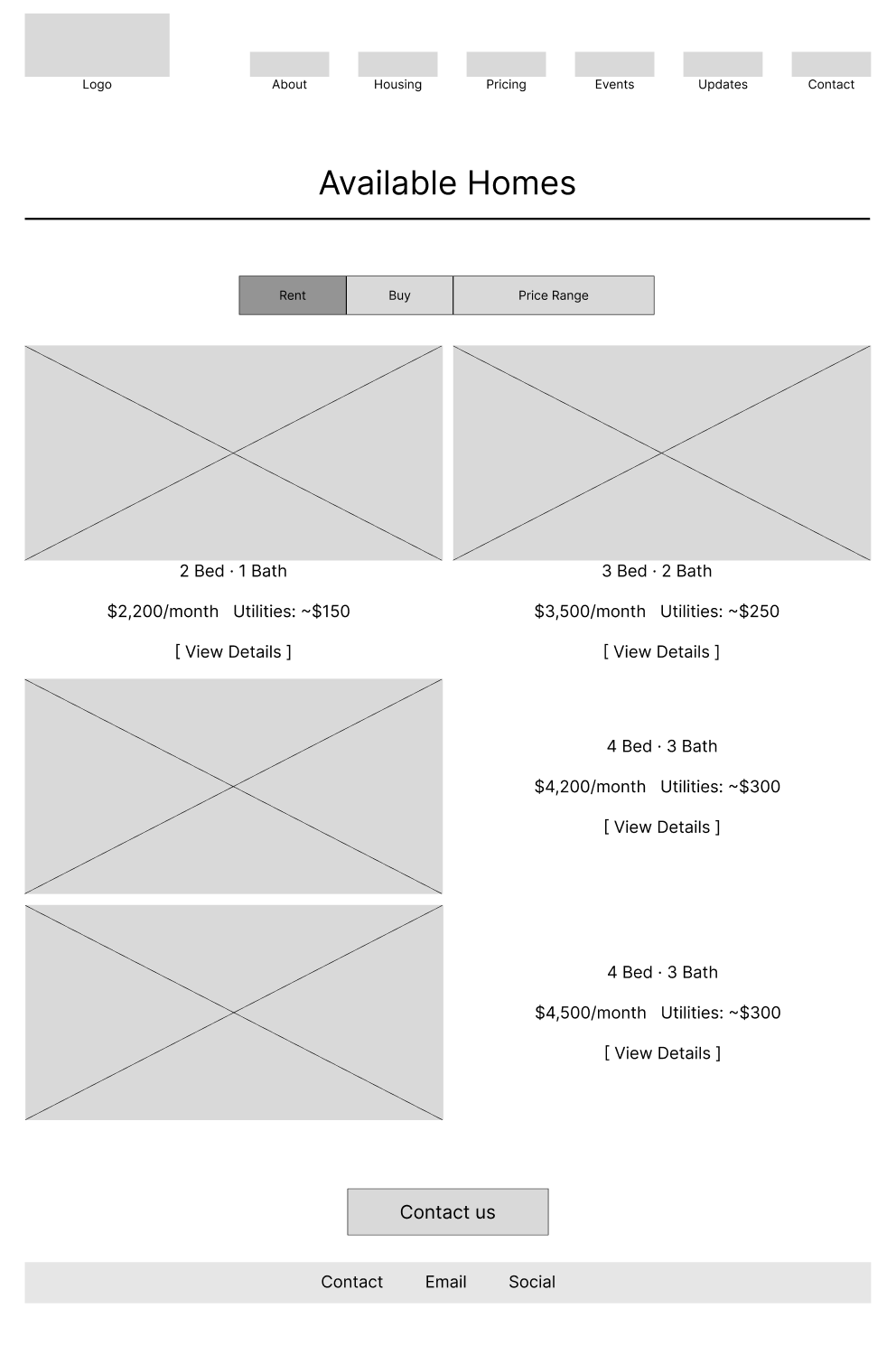
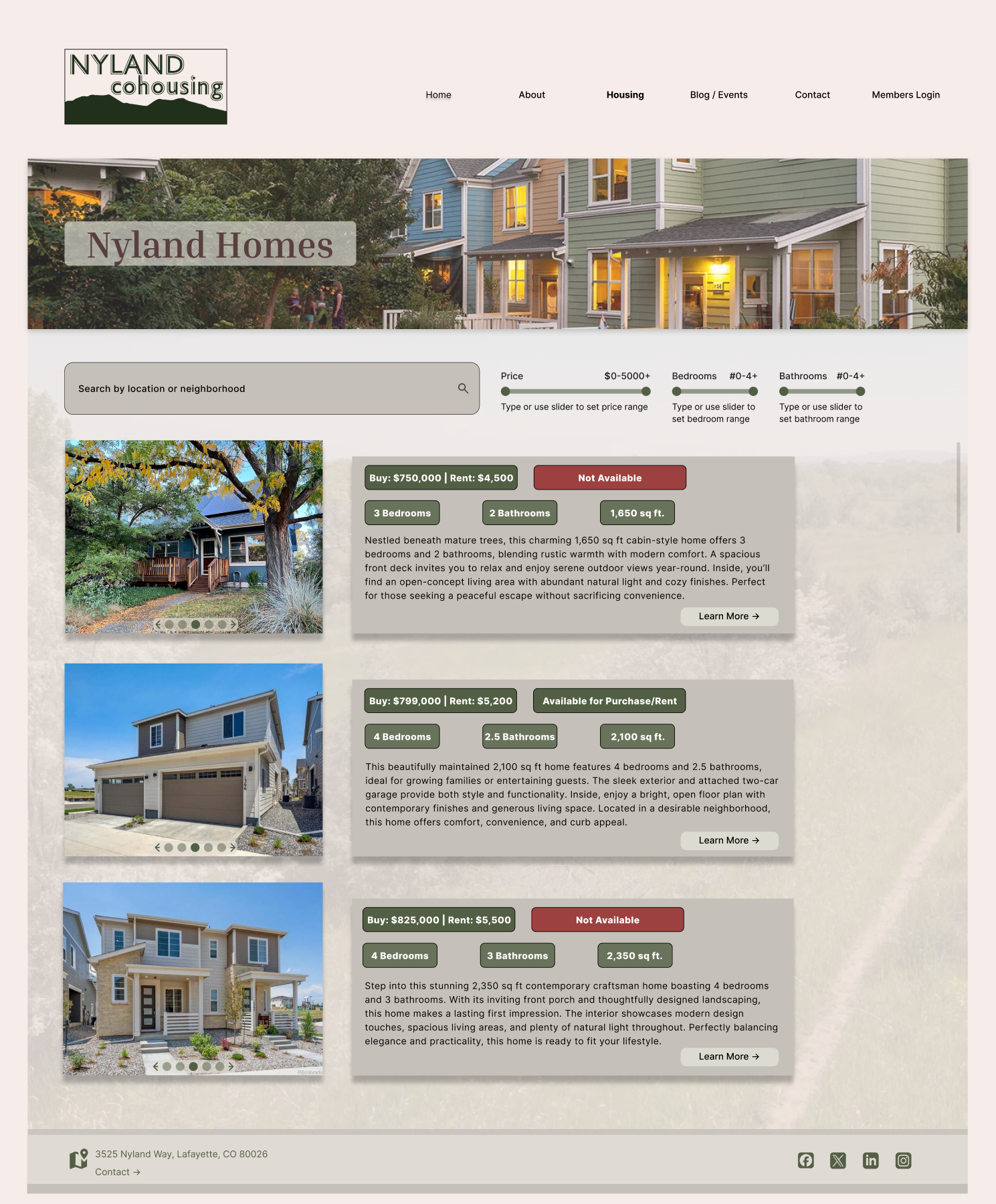
Pricing appears on housing listing cards. When no homes are available, the next step points to the waitlist or a contact option.

— Phase 4 — Core Findings
3 prioritized issues
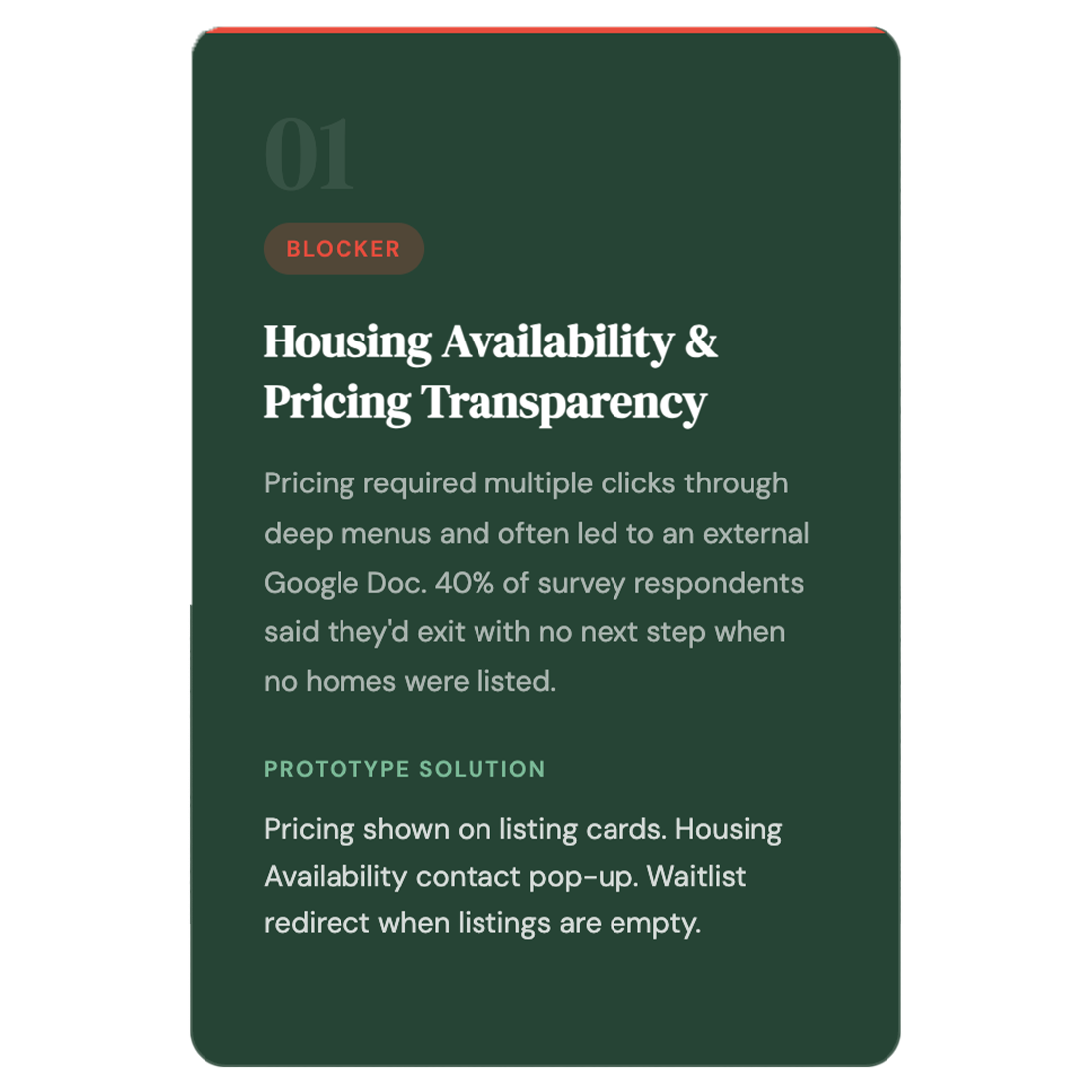
Synthesized from all three research phases — heuristic evaluation, survey results, and 25 usability test sessions.
Making cohousing
easier to explore.
Nyland Cohousing website redesign — helping prospective residents understand community life, find housing prices, and decide what to do next.
Explore the team prototype ↗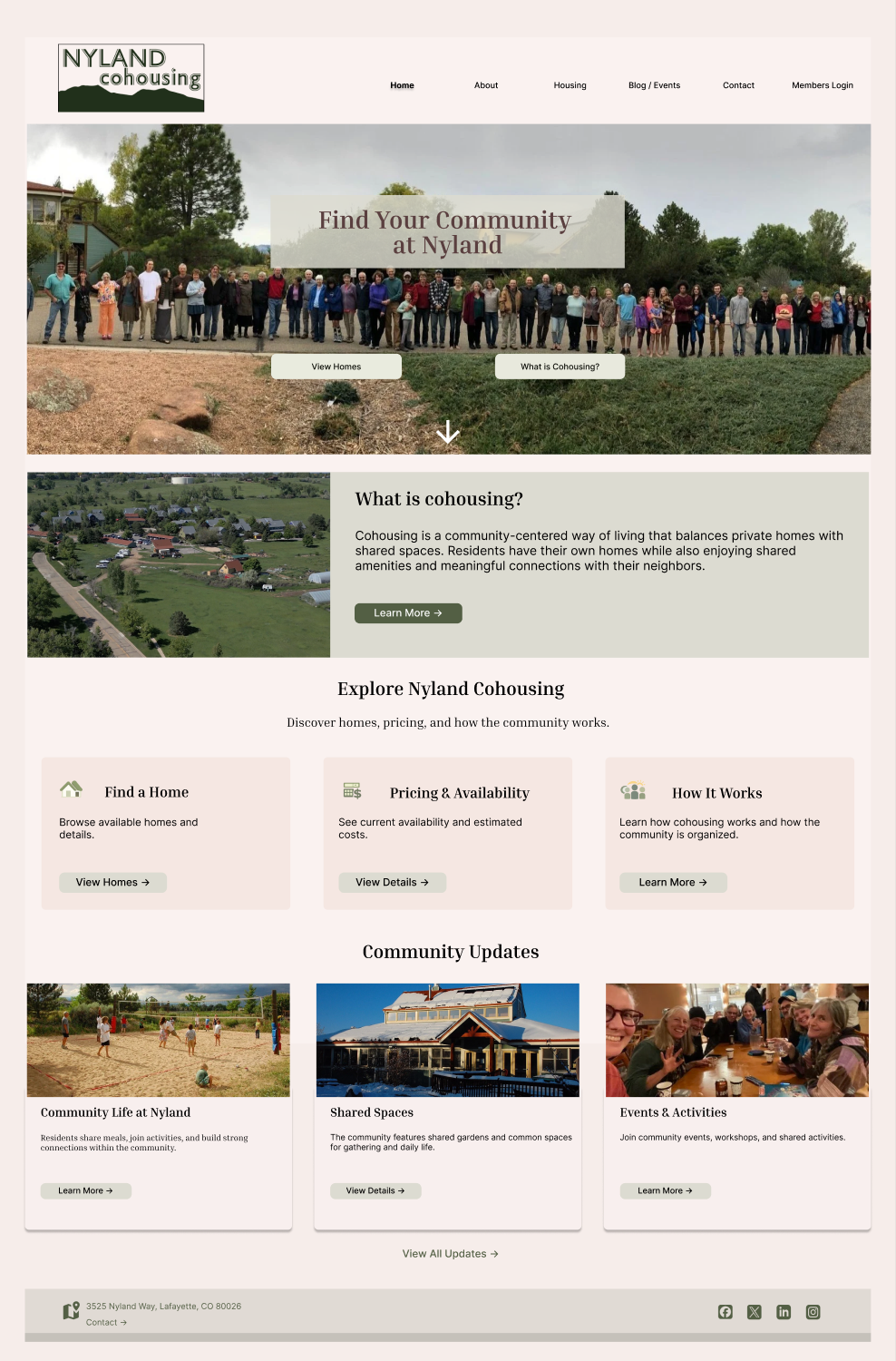
Three questions the website needed to answer.
Nyland is an intentional community in Lafayette, Colorado. Its website serves current residents and people considering joining the community.
First-time visitors needed to understand what cohousing is, find housing and financial information, and see evidence of an active community. Our team evaluated the existing website and developed a redesign around those needs.
I participated in heuristic evaluation, survey design, usability test moderation, analysis, prototype design, and the final presentation.
I moderated sessions with five participants and created the early homepage, housing, and cohousing wireframes shown below. The high-fidelity prototype is the team’s final deliverable.
Finding pricing was the biggest point of friction.
Paraphrased from the existing-site usability findings.
Cost information was hard to locate.
Pricing required searching through navigation. The proposed solution puts prices alongside homes, with clear availability and contact actions.
The concept needed a clearer introduction.
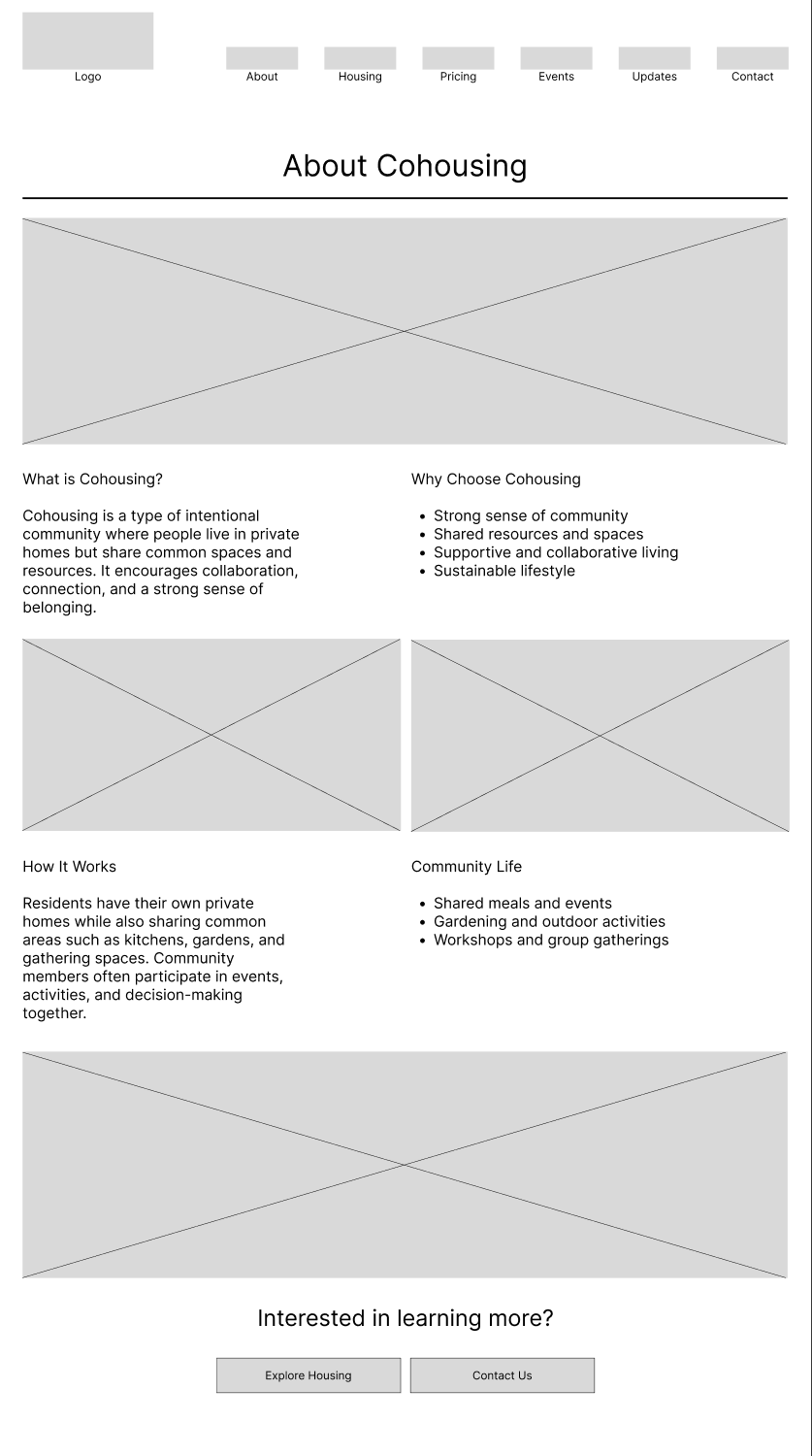
Dense explanations and unclear labels made the concept harder to scan. The redesign adds a homepage summary and a dedicated explainer.
Visitors could not find updates.
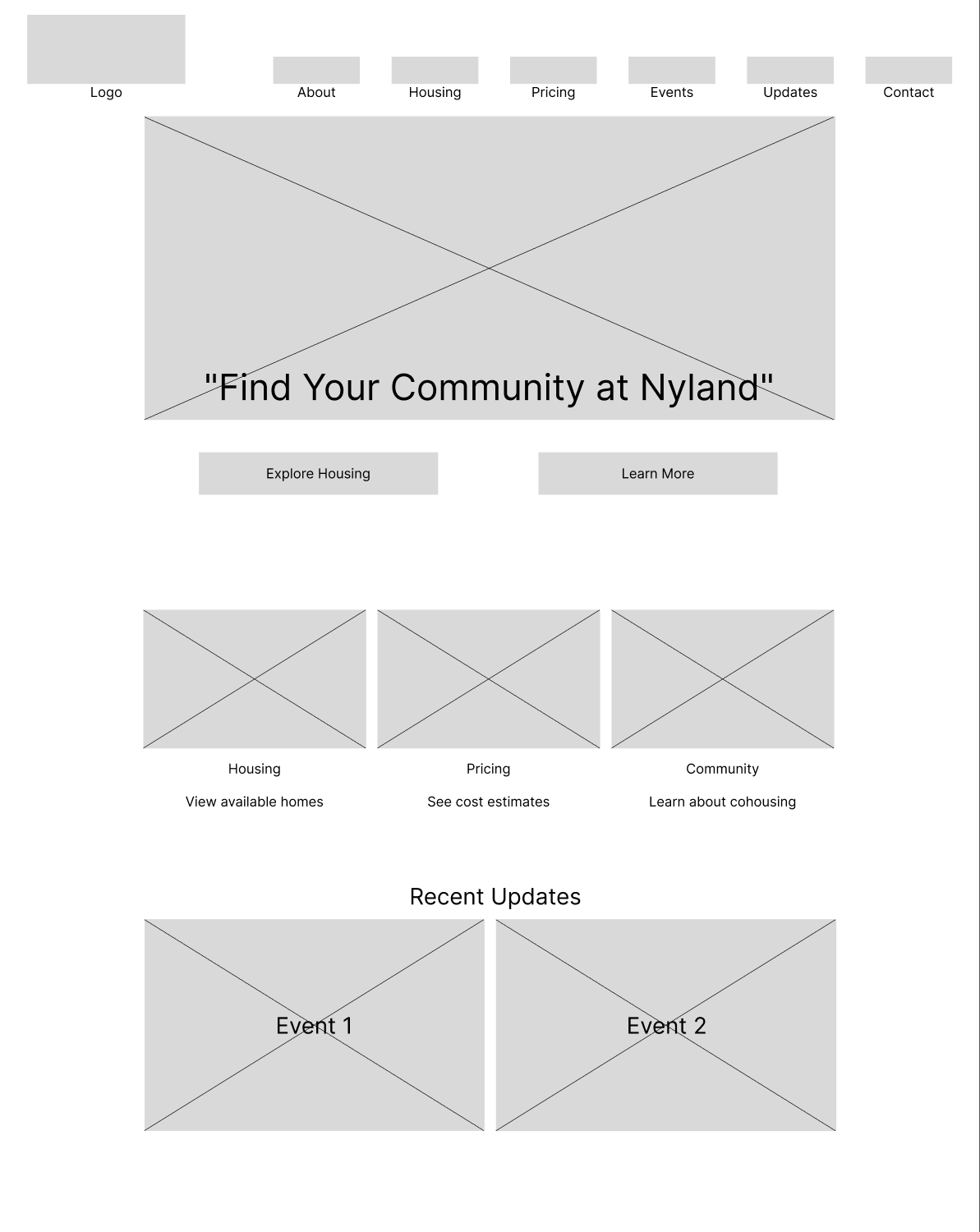
The original site had no dedicated news section. None of my five participants found updates. The redesign adds visible community content and a Blog / Events destination.
From expert review to observed behavior.
Review the structure.
Independent reviews against Nielsen’s 10 usability heuristics identified missing active-page indicators, inconsistent navigation, buried explanations, and dense content.
Understand expectations.
A SurveyMonkey survey with five respondents explored what visitors expected to find. Its small sample informed our direction alongside the evaluations and tests.
Watch people search.
The team used a shared six-task plan in remote Zoom sessions with think-aloud. I moderated five sessions; team findings covered 25 participants.
My five sessions, alongside team patterns
Times below are approximate averages for my five participants. The final column summarizes the cross-team findings. Attempting a task does not mean completing it successfully.
| Task | My sessions | Cross-team pattern |
|---|---|---|
| Find what cohousing is | ~0:46 | Text-heavy; unfamiliar visitors took up to 2:04. |
| Find a community value | ~0:36 | Consistently fast; the values section was well structured. |
| Find homes information | ~0:44 | Generally easy; participants engaged positively with housing content. |
| Find pricing / financial info | ~1:14 | Biggest friction; longest attempt 4:12. Multiple users said they would exit. |
| Find community events | ~0:28 | Mixed; partial information, without a clear events page. |
| Find updates / news | 0 / 5 success | Users checked the footer; a dedicated updates section did not exist. |
View heuristic and survey evidence
Heuristic evaluators: Angelo Jin, Kiley Amundson, and Richard Chu. The reviews also noted that the calm, nature-inspired visual style suited the community.
View the participant observation sheets
These are the research tables retained from the original case study. Names are pseudonyms. Open each image for a readable full-size view.
My early wireframes → the team’s final prototype.
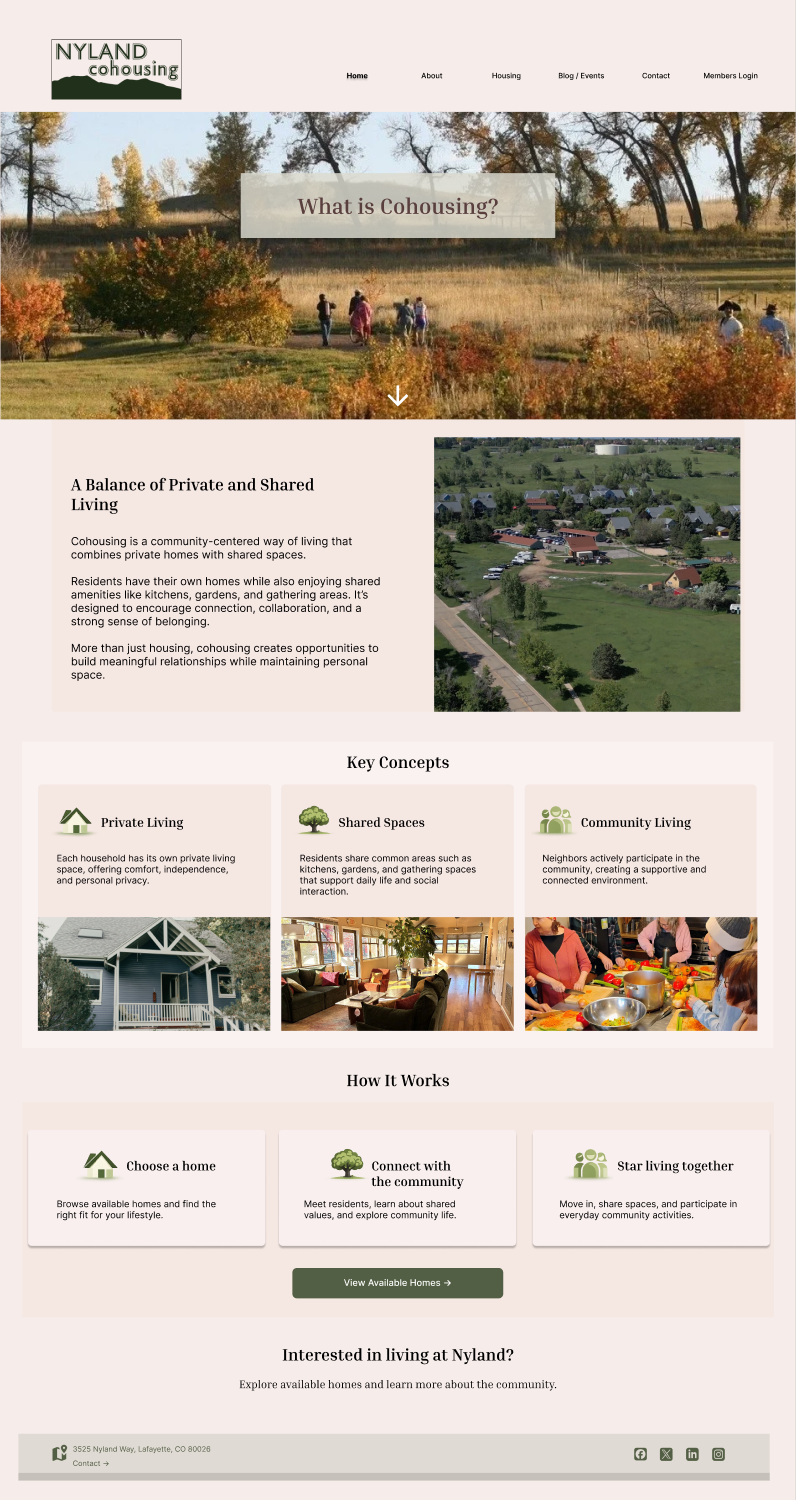
The wireframes turned research findings into page structure. The team’s final prototype developed those ideas into a more complete interface.
These pairs show design iteration, rather than the original website before a redesign. The final prototype has not been retested. Housing prices are prototype content, not verified current listings.
01 · Housing & pricing
Keep cost visible where visitors compare homes.
My early wireframe · Assignment 8
 Open full screen ↗
Team final prototype · Assignment 9
 Open full screen ↗
02 · Cohousing comprehension
Break a dense explanation into distinct concepts.
My early wireframe · Assignment 8
 Open full screen ↗
Team final prototype · Assignment 9
Open full screen ↗03 · Homepage & community updates
Give visitors clear places to start.
My early wireframe · Assignment 8
 Open full screen ↗
Team final prototype · Assignment 9
Open full screen ↗Explore the proposed experience.
The team’s interactive prototype connects the homepage, housing search and details, cohousing explanation, and community content.
The housing flow also includes availability and contact states, successful submission, and missing-information feedback.
Open interactive prototype ↗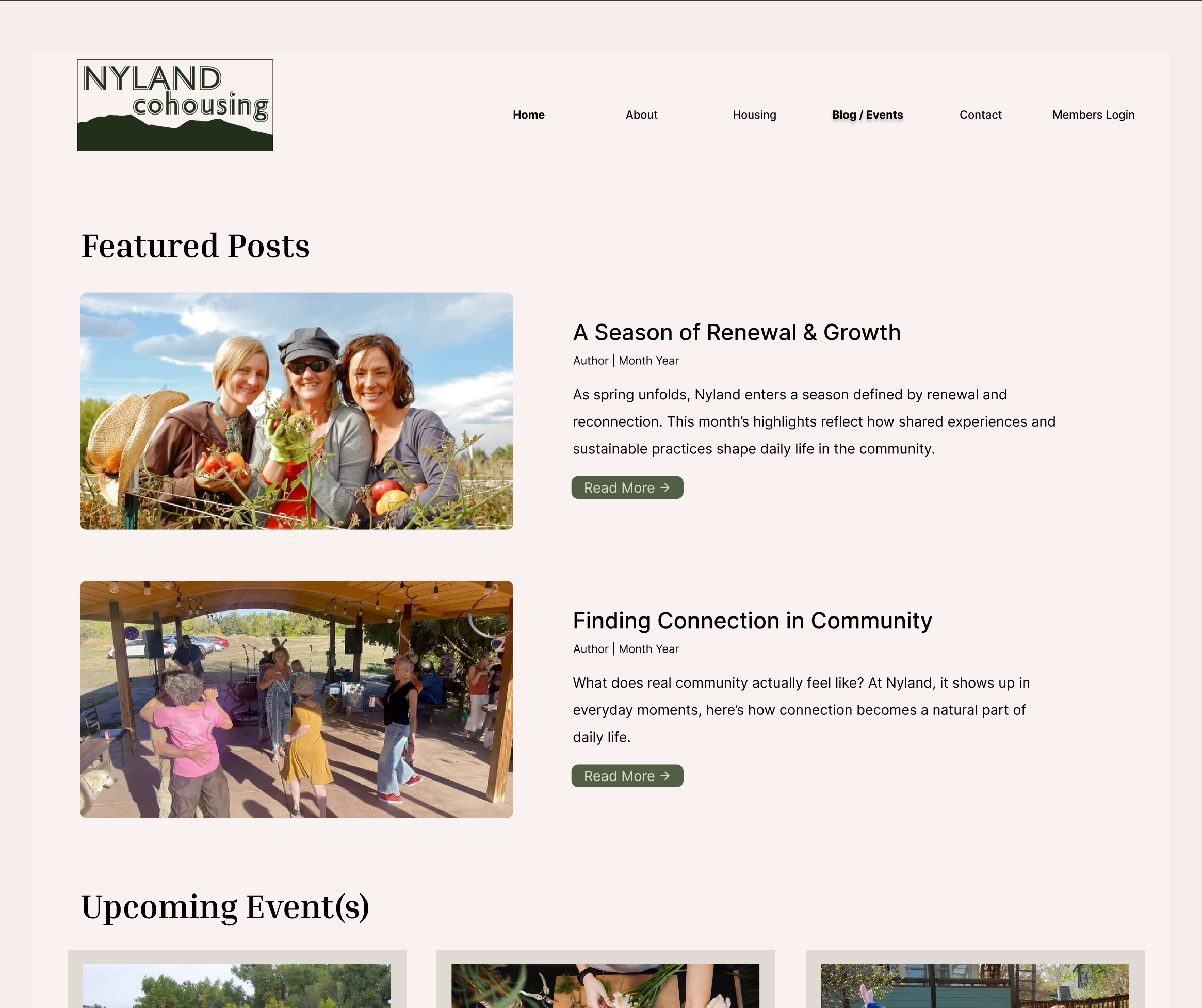
What we know — and what comes next
Research on the original website established the problems. The redesign proposes solutions; it does not yet demonstrate improved task completion or faster times.
Next, I would repeat the pricing, cohousing, and updates tasks with prospective residents, including older users. I would compare completion rates, time, and points of confusion, then refine the design.
What I learned from the full research cycle.
What worked
- Think-aloud revealed the reasoning behind navigation choices and where people expected information to be.
- Independent heuristic reviews helped us compare findings instead of relying on one evaluator.
- Participants’ interest in community activity helped connect content priorities to the redesign.
- Moving from evaluation to wireframes made each design decision traceable to an observed issue.
What I would improve
- Pilot the task wording before sessions to reduce different interpretations.
- Record and time each task separately for cleaner comparisons.
- Give participants a better think-aloud warm-up and ask brief follow-up questions.
- Recruit more people actively seeking housing, especially older visitors.
- Retest the final prototype before making claims about its effectiveness.

— Phase 5 — Prototype Design
High-Fidelity Redesign
The screens below propose fixes for pricing, cohousing explanation, and community updates. This redesign has not been retested.

Final deliverable
Interactive Figma Prototype
The team's final prototype is fully interactive — click through the complete user flow addressing all 3 prioritized issues: cohousing comprehension, housing pricing visibility, and community updates.

Figma prototypes cannot be embedded — click the screens below or use "Open in Figma" to interact with the full prototype.
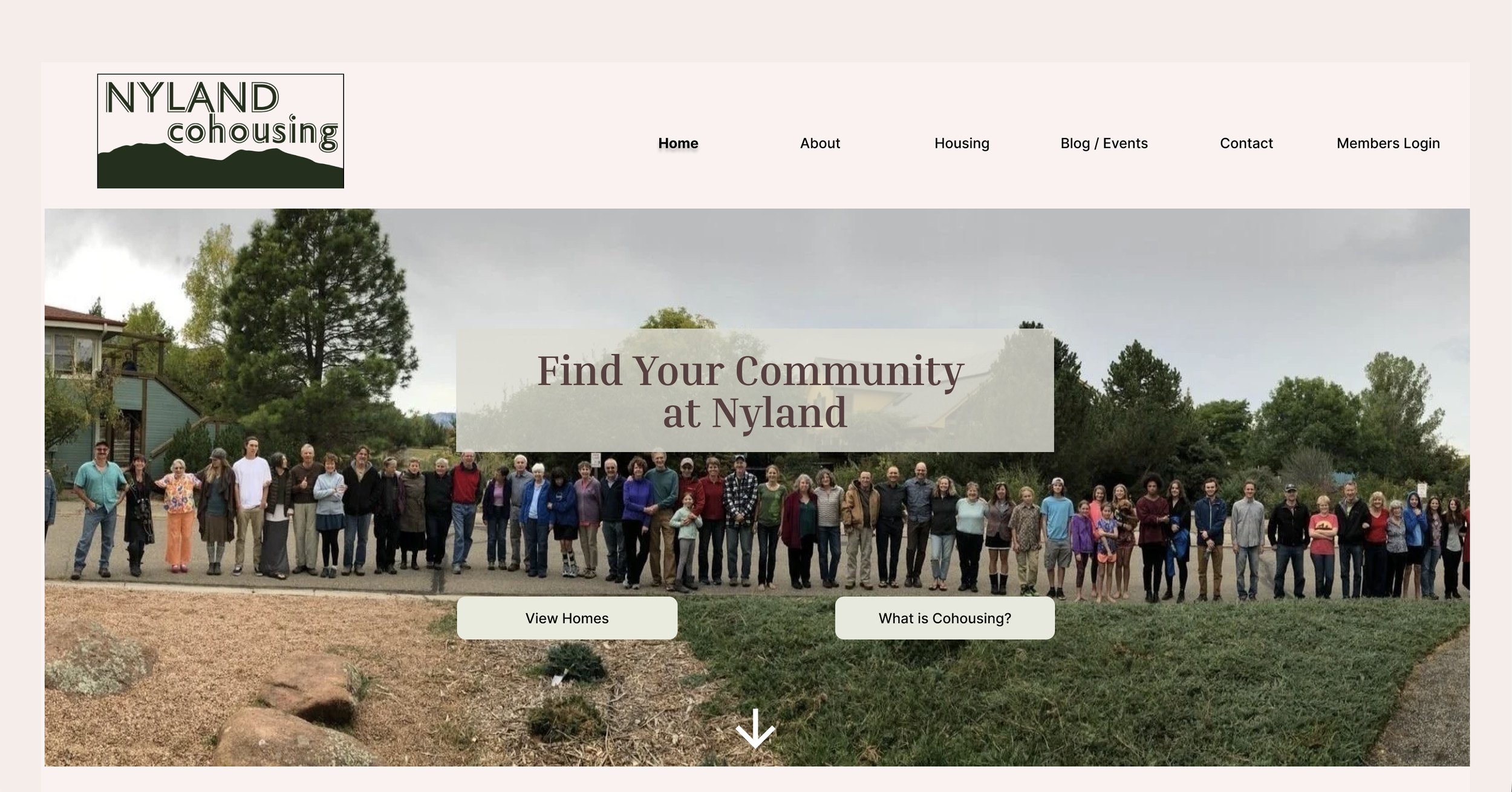
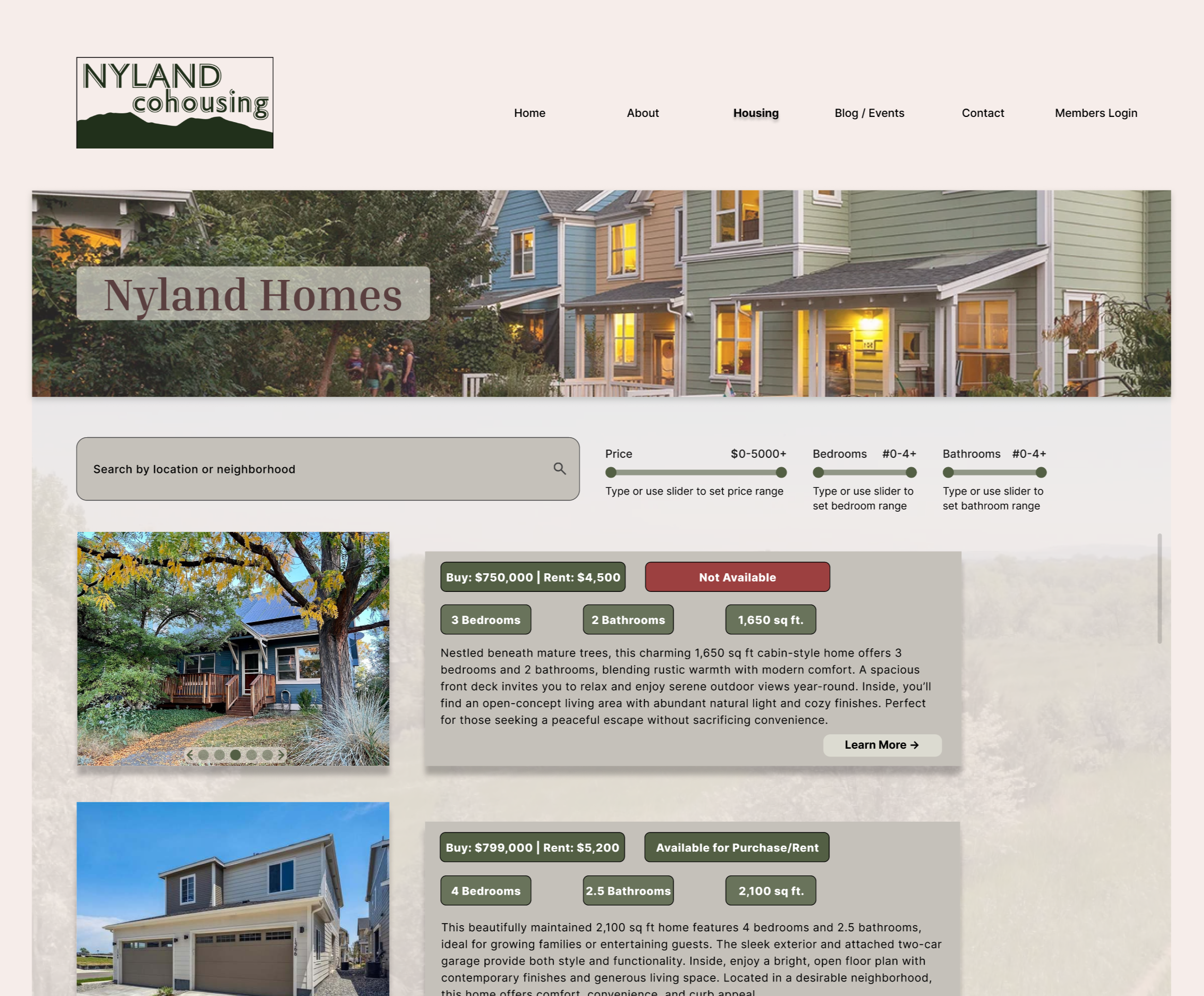
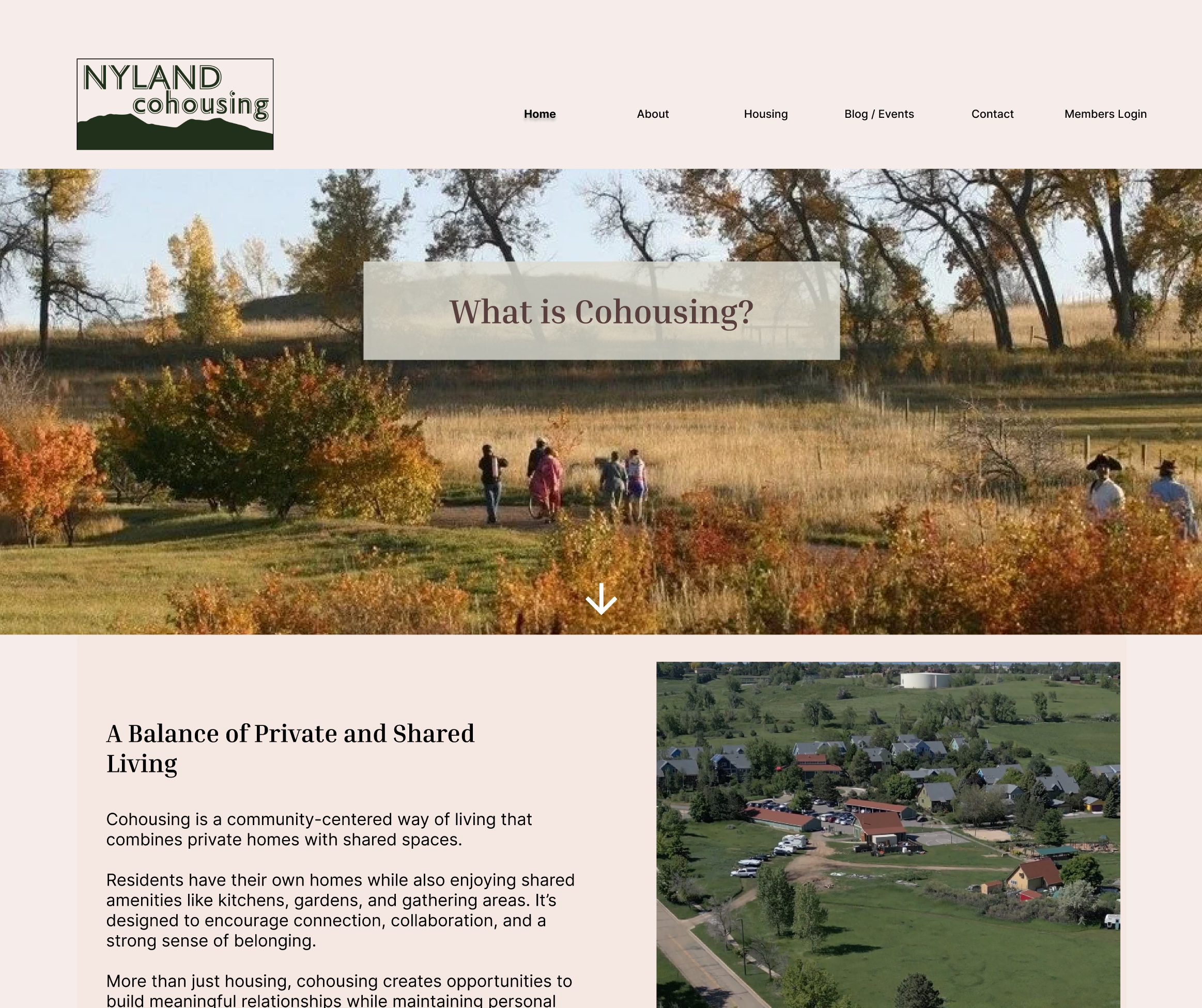

Issue 1 — Blocker
Housing & pricing visibility
Pricing on listing cards · Waitlist redirect · Contact pop-up

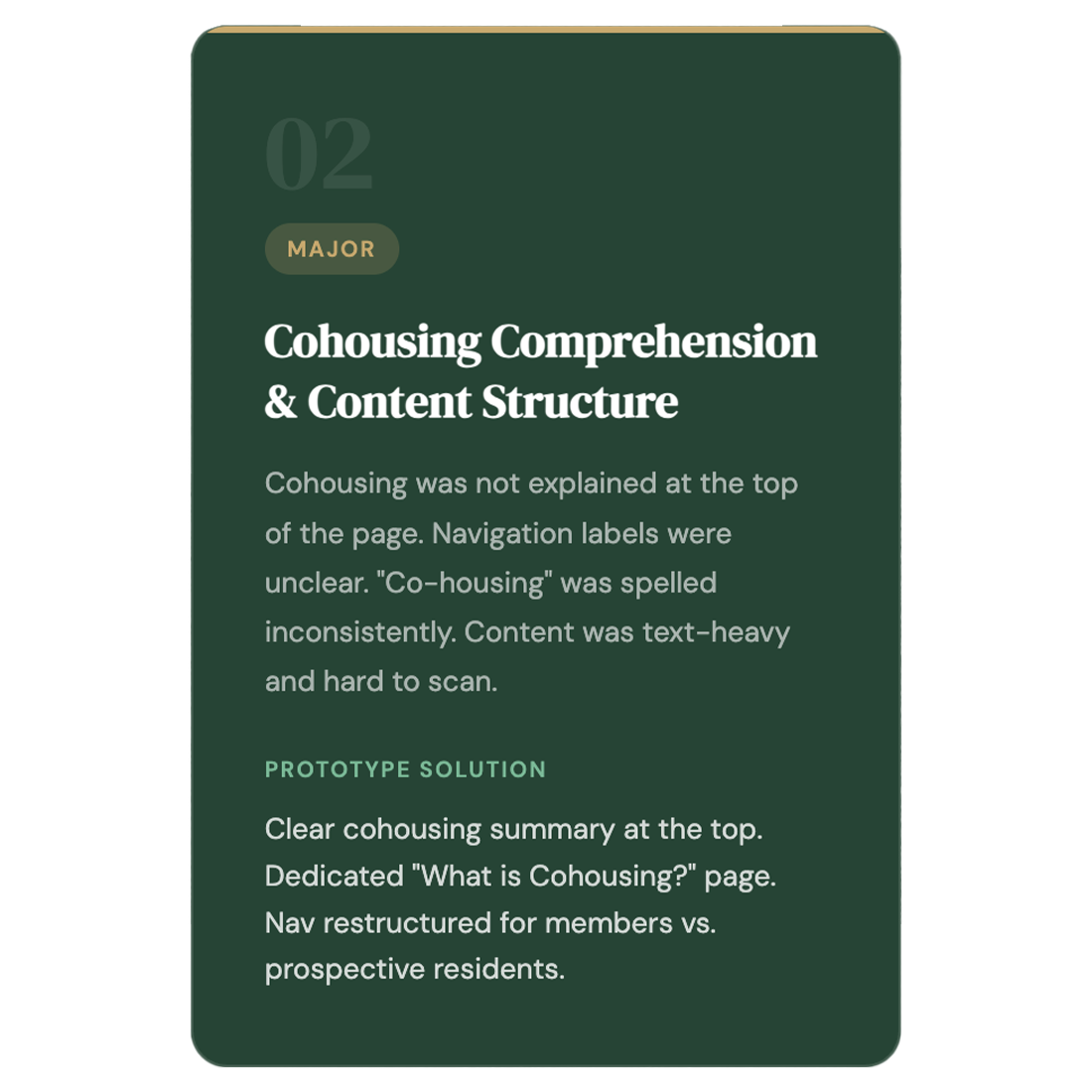
Issue 2 — Major
Cohousing comprehension
Summary at top · Dedicated explainer page
· Restructured nav
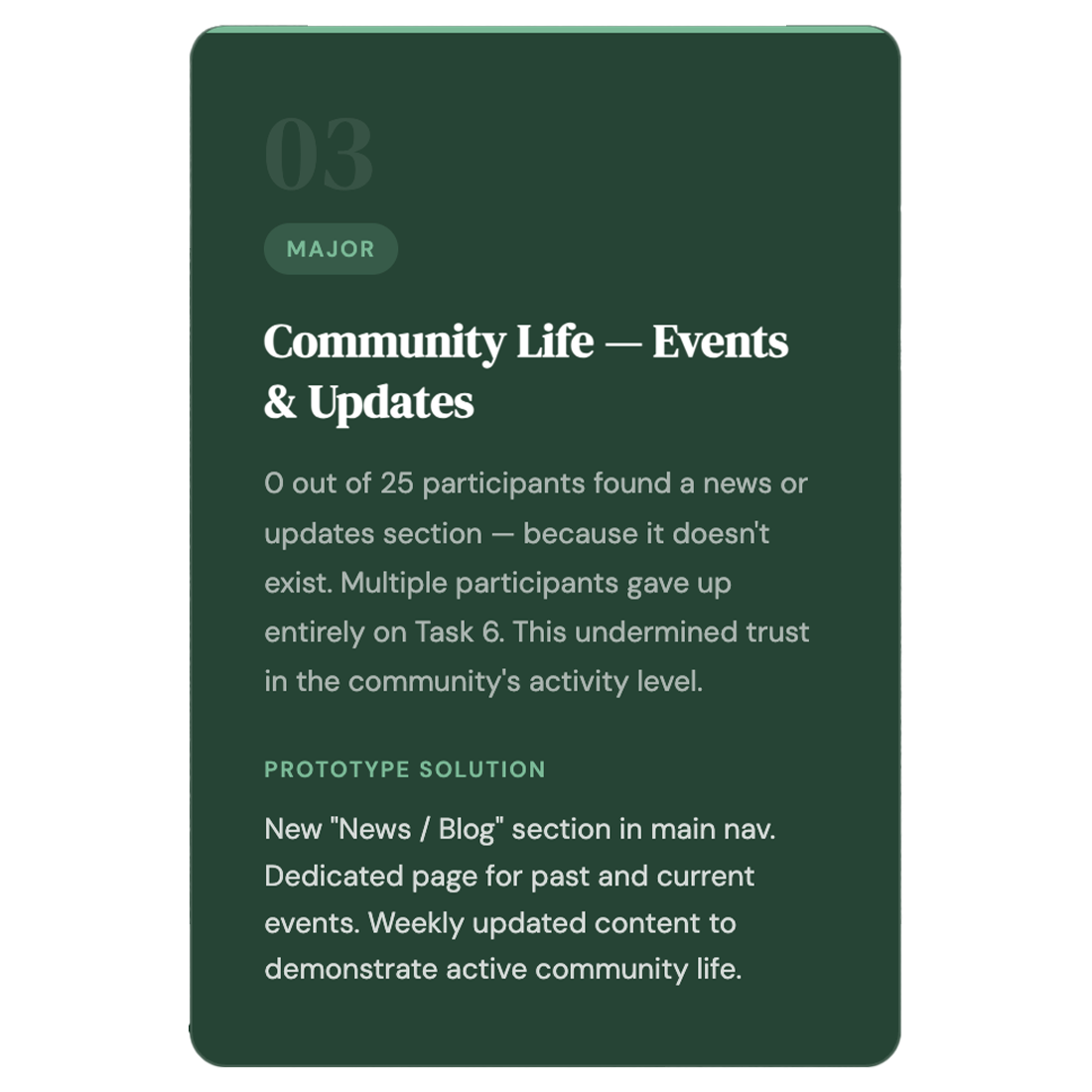
Issue 3 — Major
Community life & updates
News / Blog in nav · Events page · Weekly updates
— Phase 6 — REFLECTION

What I learned
What went well
Think-aloud protocol was highly effective — hearing participants verbalize their reasoning revealed issues that observation alone would miss.
All 5 of my participants completed all 6 tasks, confirming the site is navigable despite its issues.
Participants engaged most strongly with community content (Activities section), giving rich qualitative insight into user priorities.
Running the full cycle — heuristic → survey → usability test → prototype — gave a complete picture of where the site fails and why.
Independent evaluations from 3 team members significantly reduced individual bias in the heuristic phase.
Running a full UX research cycle from expert review through prototype design gave me hands-on experience with every stage. Here's an honest reflection.

What I'd do differently
Run a pilot test before actual sessions to catch unclear task wording — participants sometimes interpreted tasks differently than intended.
Record each task separately rather than each scenario, for more precise timing data and cleaner comparisons.
Provide a more thorough warm-up for the think-aloud method — some participants were initially quiet.
Recruit more diverse participants, particularly older users and people actively searching for housing, to better match real target users.
Add brief follow-up questions between tasks to distinguish site confusion from task wording confusion.